News, analysis, resources and documents that help us advance "Education for Liberation." In addition, we provide critical analysis of racism and capitalism in all their ugly forms.
Sunday, October 30, 2011
LAUGHING FOR LIBERATION-
Cracking On Capitalism Mounting Crises and Our Magnificent Global FightBack
US White Male Dilemma
Saturday, October 29, 2011
-----------------------
The Racialized $1 Trillion in Student Debt Obama Aims to Ease?
by Julianne Hing, Hatty Lee
colorlines.com
Friday, October 28 2011
Congress may be gridlocked, but that doesn't mean President Obama's hands are tied. On Wednesday the president announced that he's moving to ease Americans' student debt load with an executive order that would save borrowers "hundreds of dollars a month" in student loan payments.
Called the "Pay As You Earn" plan, starting January 2012 people would be able to cap their federal student loan payments at 10 percent of their discretionary income. Any remaining debt would be forgiven after 20 years. This cap was due to take effect in two years, but Obama's moved the timetable up. In his speech at the University of Colorado at Denver, Obama said that the plan, which would also allow students to consolidate their federal student loans under a lower interest rate, could help around 1.6 million Americans ease their monthly bills.
"Let me tell you," Obama told the cheering crowd. "I remember this. I remember writing, like, five different checks to five different agencies and if you lost one that month you couldn't get all the bills together. And if you missed the payment, suddenly you were paying a penalty."
Obama's proposal isn't exactly a new idea, but rather a revision. It's lifted from the IBR, or the income-based repayment plan, which was signed into law in September 2007 by President George W. Bush. Bush's initiative allowed students to cap their federal student loan payments at 15 percent of their discretionary income, and allowed students to walk away from the rest of their debt after 25 years.
But Obama's executive order comes at an especially dire time, when college costs are rapidly increasing and with it, the amount of debt students are taking on in order to pay for school. Among those who borrow to pay for school, students of color are disproportionately saddled with high levels of debt. We rounded up the latest numbers that show exactly how much debt college graduates are carrying around with them these days, and who's in need of relief.
—Julianne Hing
////////// A comment on this piece fromsandela85
This legislation is bad bad bad and students in countries
worldwide have opposed income-contingent loan repayment schemes for
years.
This simply means that those who owe more and make less
(disproportionately racialized folks, indigenous folks and people with
disabilities) pay more in their education through interest because they
have much larger terms, even if it will be written off after 20 years.
In the end, because the system marginalizes these groups of people, we
will be forced to pay much more for our education than the average white
person without a disability. Isn't it kinda whack that those who are
rich end up paying the least because they have no interest to deal with.
Yes. That is whack.
Also, in countries where this kind of
legislation is in place, it has led to the skyrocketing of tuition fees,
as colleges and universities can now claim that no student will be
unable to pay; after all, they will never have to pay more than 10% of
their income.
Bottom-line: Student loans are an unsustainable tax on the poor.
Education
should be free. The passing of knowledge and the process of knowledge
discovery shouldn't cost anything. It's necessary for the survival of
any society. And knowledge certainly shouldn't be reserved for the minds
of the wealthy few.
Friday, October 28, 2011
NYC Black/Latino Student-led Study Shows System Ain't Workin'!
To get a PDF version of the report, go to:
http://icope.org/documents/yrnes.pdf
Sunday, October 23, 2011
#OccupyWallStreet:
A Letter from Goldman Sachs
A Letter from Goldman Sachs Concerning Occupy Wall StreetNew York - The following is a letter released this week by Lloyd Blankfein, the chairman of banking giant Goldman Sachs:
October 21, 2011
Dear Investor:
    Up until now, Goldman Sachs has been silent on the subject of the
protest movement known as Occupy Wall Street. That does not mean,
however, that it has not been very much on our minds. As thousands
have gathered in lower Manhattan, passionately expressing their deep
discontent with the status quo, we have taken note of these protests.
    And we have asked ourselves this question:
    How can we make money off them?
    The answer is the newly launched Goldman Sachs Global Rage Fund, whose
investment objective is to monetize the Occupy Wall Street protests as
they spread around the world. At Goldman, we recognize that the
capitalist system as we know it is circling the drain--but there's
plenty of money to be made on the way down.
    The Rage Fund will seek out opportunities to invest in products that
are poised to benefit from the spreading protests, from police batons
and barricades to stun guns and forehead bandages. Furthermore, as
clashes between police and protestors turn ever more violent, we are
making significant bets on companies that manufacture replacements for
broken windows and overturned cars, as well as the raw materials
necessary for the construction and incineration of effigies.
    It would be tempting, at a time like this, to say "Let them eat cake."
    But at Goldman, we are actively seeking to corner the market in cake
futures. We project that through our aggressive market manipulation,
the price of a piece of cake will quadruple by the end of 2011.
    Please contact your Goldman representative for a full prospectus. As
the world descends into a Darwinian free-for-all, the Goldman Sachs
Rage Fund is a great way to tell the protestors, "Occupy this." We
haven't felt so good about something we've sold since our souls.
Sincerely,
Lloyd Blankfein
Chairman
Friday, October 21, 2011
More and More Blackfolk Joining the OccupyWallStreet Movement
Filmmaker Obatala Mawusi said that the days he spent documenting the
Occupy Wall Street protests in New York City were "eye-opening." In
particular, the diversity he saw among the protesters belied the images
of the movement in mainstream media. In early October 2011, Mawusi spoke
to some of the Black participants about why the Occupy Wall Street
movement attracted them.
A Call for a National Dialog on Black Left Participation in the OWS Movement By The Black Left UnityNetwork and USHRN Labor Working Group
Thursday, October 20, 2011
Over the last two years, the Black Left Unity Network (BLUN) has engaged in a process that focused on reaching out to Black worker activists in the labor movement, and other core social movements that organize and mobilize the Black working class. We have looked for opportunities such as building support for the Hurricane Katrina survivors and organizing and promoting a Reconstruction movement as a strategic flank of the U.S. anti-imperialist and anti-capitalist struggle, using Survivor Assemblies as popular democratic forums; promoting a Thank You Cuba campaign to challenge attempts to isolate Cuba and socialism as a racist regime; and participating in the Human Rights movement to help ground it in mass bases of resistance to help shape and influence its demands and anti-imperialist political character.
While there is much more needed in developing the BLUN as a unity process; a major aspect of the process must be that of forging Black left unity within the context of trying to unify and give a working class and internationalist perspective based in concrete demands to the struggles and upsurges that originate from or may have an impact on the Black masses. Therefore, with the emergence of the OWS as an national phenomenon with developing organizational expressions in various cities across the country, members of BLUN have taken the position that it is important to develop a process for addressing the questions that have quickly surfaced related to the political character of this movement and the role and participation of Black, Latino and Native forces.
BLUN along with the Labor working group of US Human Rights Network, hosted a call on Thursday, October 20, at 3pm EST. Some of the questions discussed included:
1. Whileour communities are weakly organized, disconnected from the occupation motion, how might the occupy wall street be used to organize our communities for fundamental social change in the interests of the Black masses? Or can it?
2. Howcan the Black left help to build alliances between the Black and Latino working classes in particular and with workers of color in general to begin forging Black and Brown working class unity as key to driving a popular agenda and mandate for radical social transformation in this period? 3. How can Black left forces direct this anti-capitalist sentiment and energy of the OWS to increase the existing fight backs in the labor movement and the Black communities?
4. Sincelabor is an important social force in the capitalist system, how can Black workers influence and help to mobilize the character and content of labors involvement in the OWS?
5. Howcan the Black left become a force in helping to promote U.S. accountability to the UN Human Rights Conventions as a transitional program toward internationalizing the OWS movement? To JOIN this much needed effort and for more info, Contact: Saladin Muhammad at saladin62@aol.com.
Visit: www.blackleftunity.org
Thursday, October 20, 2011
Brother Sgt. Shamar Thomas Confronts & Vents Against NYC Police Terror
United States Marine Corps. Sgt. Shamar Thomas from Roosevelt, NY went
toe to toe with the New York Police Department in Times Square on Saturday 15 October. It was at the end of the massive Occupy Times Square march and demonstration that drew at least 50,000 people.
An activist in the
Occupy Wall Street movement, Thomas voiced his opinions of the NYPD
police brutality that had and has been plaguing the #OWS movement.
Thomas is a 24-year-old Marine Veteran (2 tours in Iraq), he currently plays amateur football and is in college.
Thomas- a native New Yorker -comes from a long line of people who sacrifice for their country:
Mother, Army Veteran (Iraq), Step father, Army, active duty
(Afghanistan), Grand father, Air Force veteran (Vietnam), Great Grand
Father Navy veteran (World War II).
There is a lot of Post-Traumatic Stress Syndrome underlying Brother Thomas's rage against the police. Let's hope as the OccupyWallStreet Movement grows, he will be able to channel that stress in a positive and healing way so that he can advance as a Warrior for Peace and Justice.
Monday, September 12, 2011
LOWKEY ft M1 (DEAD PREZ) & BLACK THE RIPPER - OBAMA NATION PART 2
Here's serious HipHop soundz about Obama's continuance of Imperialism's atrocities.
Lowkeyis a British musician, poet, playwright and political activist of English and Iraqi descent. He first came to fame through a series of mixtapes he released before he was 18, before taking a hiatus from the music business. He would return in 2008 with wider music coverage, featured on BBC Radio and appearing at various festivals and concerts including the Electric Proms, Glastonbury, T In The Park and Oxegen in the build up to his first solo album, as well as collaborating with other famous British musicians to form a supergroup.
QUICK BIO TABLE
BIRTH NAME: Kareem Dennis
BORN: London, UK
ORIGIN: London, UK
OCCUPATIONS: Emcee, Activist, Playwright
YEARS ACTIVE: 2003-present
LABELS: SO Empire Recordings
BIO Lowkey was born in London to an Iraqi mother and an English father. From the age of twelve he began to rap, initially imitating American rappers but soon using his own accent. He began attending the open mic sessions which took place at the Deal Real record shop on Carnaby Street, Central London. The first time he went he introduced himself as Lowkey and was told there was already a regular there by that name; the two had a rap battle over the use of the name which he won.
Solo Work
The first part of his mixtape series Key To The Game, was released independently in 2003. Within a year and a half he had released a second and third volume, all of which gained critical acclaim from UK hip hop circles.
Though the first volume largely used music from other artists, the second was mostly original work in conjunction with numerous artists and producers while the third, which had no skits or short songs like a traditional mixtape would, was mostly his own work. Despite releasing the third mixtape in 2005, it would be another three years until he released his album proper preferring instead to explore other aspects of his career until then.
While Lowkey was busying himself with European tours in support of Immortal Technique, Canibus, and Dead Prez, he began to make musical contacts and set about recording his debut album proper. Though stalled by other artistic endeavours, Dear Listener eventually was released in January of 2009. He bookended the year with another release, Uncensored, a mixtape compiling new material and collaborations with highlights from the entire Key To The Game series and Dear Listener.
This was released digitally in December through iTunes.
Collaborations
Lowkey joined a hip-hop group called Poisonous Poets that released one self-titled mixtape in 2005. Poisonous Poets (sometimes known as Double P) was founded by Doc Brown whom Lowkey met at Real Deal records. The group also consists of Reveal, Stylah, Tony D and Therapist.
Lowkey's manager passed on the first two parts of Key To The Game to Jon McClure, frontman of Reverend and The Makers who is also an outspoken activist.
Wanting to mix popular music with politics, and mix indie rock with hip-hop, the two set about making a supergroup, Mongrel, composed of other noted musicians. Also in the band is Arctic Monkeys drummer Matt Helders and ex-bassist Andy Nicholson alongside bassist of Babyshambles Drew McConnell and a revolving set of other musicians. They have had trouble coordinating their busy careers to perform live dates and their debut album has already been pushed back from October to 2009 along with a February tour.
The album, Better Than Heavy, was released for free with The Independent on March 7, 2009.
After touring with Immortal Technique, the two made a single, "Voices of the Voiceless" which was released in September 2009 after a one minute preview was officially released on YouTube. The song touches on racism, world revolution, war, colonialism and other global political issues.
In December 2009, Lowkey revealed he would release a second part to "Long Live Palestine" featuring international artists including Palestinian rap group DAM, Anglo-Palestinian soloist Shadia Mansour, The Narcicyst from Iraq, Iranian artists Hich Kas and Reveal, Syrian-Lebanese performer Eslam Jawaad and African-American Muslim Hasan Salaam. The single was packaged in an EP with the first part and an instrumental. It went on to reach the Number 1 position in the Hip Hop Charts of both Amazon and iTunes.
Other Work
In July 2008 the Theatre Royal, Bath put on a production of 'Max and Beth', a contemporary adaptation of Macbeth by William Shakespeare written entirely in rhyme. Lowkey also helped publicize the NSPCC's Don't Hide It campaign, also contributing a free song to it, in which his lyrics are delivered from the perspective of a female victim of sexual abuse.
He also formed a non-profit organization, People's Army with fellow rapper Logic, who he has also made an unreleased album (New World Order) with, and met up with then-Liberal Democrats leader Menzies Campbell as a representative of his local community.
In February 2009, he traveled to Palestine and Palestinian refugee camps around the West Bank area to perform fundraising shows to help rebuild the Gaza Strip but was detained by the Israel Police for nine hours at Ben Gurion International Airport and interrogated. Later in 2009, he traveled with M-1 of Dead Prez to carry out a humanitarian aid mission and bring medical aid to the Palestinian people in Gaza.
M-1 mentioned in an interview with PyroRadio.com that a collaboration between the two had been made "I met up with a guy called Lowkey over there as well who’s from London as well, I had a chance to meet with him, he’s a good brother, we built a lot, it was real cool, we gotta get the song out." Evidence of the song is still yet to surface.
Collaborations
* Poisonous Poets (2005) (with Poisonous Poets)
* Better Than Heavy (2009) (with Mongrel)
Mixtapes
* Key To The Game Vol 1 (2003)
* Key To The Game Vol 2 (2004)
* Key To The Game Vol 3 (2005)
* Lowkey Uncensored (2009)
Singles
* "Tears to Laughter" (2009)
* "We Don't Want Them" (2009)
* "Voices of the Voiceless" (2009) (with Immortal Technique)
* "Alphabet Assassin" (2009) (with Faith SFX)
=======================
My names Black The Ripper / Samson.
I represent North London, I have
been doing this thing for about 4 years, 2 years on a serious level.
I’ve released one mixtape (‘Black is Beautiful’) and currently putting
in the work for a new one entitled ‘Holla’ Blackt’.
I havn’t been on many DVD’s but I featured quickly on Risky Roads 2. Big
up Cold Blooded and Risky for that. I’ve done two videos, both
unreleased. I’m currently shooting a video for ‘My Minds Battle’ and
that is the first release off my new mixtape ‘Holla Black’.
Black The
Ripper (aka Samson, real name Dean West) is a highly respected and
favoured hip-hop and grime MC from Edmonton N18, North London. Although
previously known on the North London circuit he made his name in the
infamous Axe FM clashes, where he duppied off numerous opponents
consistently. Black The Ripper is one of the best emcees/artists in the
scene at this time & will be for years to come; setting high levels
with his consistent conscious bars and undeniable straight star quality
that he brings to the mic.
Black remains a solo artist although he has collaborated with many of
the grime scene’s biggest names, most notably his Motivation Music
series with Cookie G, Moony and Chipmunk. He has also released 2 solo
mixtapes - Black Is Beautiful and Holla Black (Samson Samson). Black’s
style reflects a sense of self-determination, creative consciousness,
and entrepreneurship using subversive style to shock as well as
entertain; his work challenges orthodox thinking whilst sticking two
fingers up at the establishment.
Saturday, September 10, 2011
Video of 13-year old Autum Ashante's First Day at Norwalk Community College
After much racist drama from the University of Connecticut, Sister Autum Ashante and her father, Batin, weathered the storm and found a better, more welcoming place to start Autum's college educational experience. She is taking a fulltime load of college level classes in Math, English and the Social Studies.
You can your support messages to her at:
ashante ashante <ashantewah@yahoo.com>
Saturday, August 27, 2011
A Year Dedicated to People of African Descent
Around 200 million people who identify themselves as being of
African descent live in the Americas. Many millions more live in other
parts of the world, outside of the African continent. In proclaiming
this International Year, the international community is recognising that
people of African descent represent a distinct group whose human rights
must be promoted and protected.
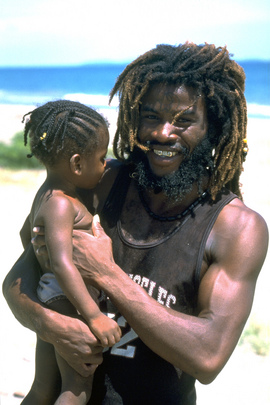
Members of the Garifuna community near
Tela, Honduras. The Garifuna people are of mixed African, Arawak and
Carib ancestry and native to the Caribbean Coast in Central America. UN
Photo/Chris Sattlberger
This International Year offers a unique opportunity to redouble our efforts to fight against racism, racial discrimination, xenophobia and related intolerance that affect people of African descent everywhere.
Navi Pillay, UN High Commissioner for Human Rights
People of African descent are acknowledged in the Durban
Declaration and Programme of Action1 as a specific victim group who
continue to suffer racial discrimination as the historic legacy of the
transatlantic slave trade. Even Afro-descendants who are not directly
descended from slaves face the racism and racial discrimination that
still persist today, generations after the slave trade ended.
--------------
Righting Past Wrongs
" This is the year to recognise the role of people of
African descent in global development and to discuss justice for current
and past acts of discrimination that have led to the situation today. "
Mirjana Najcevska, Chairperson,
UN Working Group of Experts on People of African Descent
The manifestations of racial discrimination which
characterised the slave trade and colonisation are still felt today.
Racism can manifest itself in a variety of ways, sometimes subtly,
sometimes unconsciously, but often resulting in violations of the rights
of people of African descent.
In order to combat such racism and racial discrimination, in 2001 the United Nations created the Working Group of Experts on People of African Descent
which is tasked with studying the problems of racial discrimination
faced by people of African descent living in the diaspora and making
proposals on the elimination of racial discrimination against Africans
and people of African descent in all parts of the world.
The Working Group has found that some of the most important
challenges that people of African descent face relate to their
representation in, and treatment by, the administration of justice and
to their access to quality education, employment, health services and
housing, often due to structural discrimination that is embedded within
societies.
In some countries, especially where people of African
descent are in the minority, they receive harsher sentences than those
of the predominant ethnicity and constitute a disproportionately high
percentage of the prison inmate population. Racial profiling (The Durban Declaration and Programme of Action
defines racial profiling as “the practice of police and other law
enforcement officers relying, to any degree, on race, colour, descent or
national or ethnic origin as the basis for subjecting persons to
investigatory activities or for determining whether an individual is
engaged in criminal activity.”)- which results in the systematic
targeting of persons of African descent by law enforcement officers –
has perpetuated severe stigmatization and stereotyping of
Afro-descendants as having a propensity to criminality.
In many countries Afro-descendants have the least access to
quality education at all levels. Evidence demonstrates that when people
of African descent have greater access to education they are better
placed to participate in political, economic and cultural aspects of
society and to defend their own interests.
The Working Group emphasises that the collection of data
disaggregated on the basis of ethnicity is an important element in
identifying and addressing Afro-descendants’ human rights issues.
Government policy intended to address racism and racial discrimination
cannot be correctly formulated, much less implemented, if such
information is not available. Nor can progress be measured.
-------------------
AfroBolivians Fight For Complete Recognition... Reparations to Follow
African slavery must not be forgotten
On 23 August we celebrate a vital moment in the abolition of the slave trade – so why has the day received no state support?
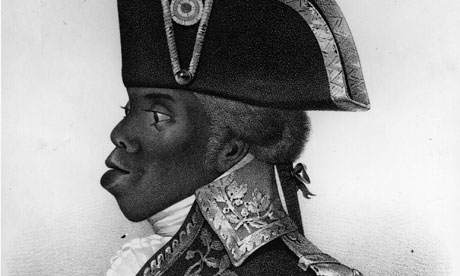
Toussaint L'Ouverture was one of the
leaders of the rebellion that saw Haiti
become the first black nation in
the Caribbean. Photograph: Hulton Archive/Getty Images
Britain woke up on 23 August largely ignorant of the fact that
it is a national day of remembrance. Four years ago the government
declared it the day to remember those millions of African people who
were captured, denigrated, enslaved, tortured and murdered, who rebelled
and ultimately survived a period rightly seen as the most heinous crime
of humankind against humankind in history. But when was the government
going to tell us? And what is it contributing to the day?
It was
220 years ago on 23 August that Africans on the island that is now Haiti
rose up against their captors and began a rebellion led first by Boukman Dutty and then by the strategist Toussaint L'Ouverture
who defeated the best armies of the British, French and Spanish and in
1804 declared Haiti the first black nation in the Caribbean. Shockwaves
ran through the slaving nations and set in motion the beginning of the
end of the trade in African people worldwide.
On 23 August last year, communities minister Andrew Stunell
– who holds as part of his responsibilities race equality and community
cohesion – said: "Acceptance and understanding of our past is important
in moving towards a future which is free of intolerance and racism."
He
rightly made the link between the world as it is today and past events –
this is not about gazing into history as an academic exercise, it is an
essential route to understanding how the inequality of African peoples
has been embedded into societies worldwide and how it continues today.
For instance, it could go a long way to inform us why Haiti is now
described as the poorest nation in the western hemisphere.
The
government promised workshops to "help black and minority ethnic-led
organisations to access funding for educational and heritage events
(including those on the remembrance of slavery and the slave trade)".
But these failed to take place. A year on, no African grassroots
organisations have received funding for events this year.
When one
such organisation applied on three occasions for lottery funding to
organise events and activities, it was turned down on each occasion. And
the Big Lottery Fund, with a £600m purse, has given zero to transatlantic slave trade applications this year or last.
By
contrast, Holocaust Memorial Day remembers the Jewish and other
genocides on 27 January and has received direct Department for
Communities funding annually since 2001. This year, as last, it was
awarded £750,000.
Is the government implying that one is more
important than the other? Is the 400-year genocide, during which Britain
became the leading slave-trading nation, no longer relevant? It appears
that "acceptance and understanding of our past" is something the
government is unwilling to practice itself.
This month a group of
British charities have reported the government to the United Nations
saying it is not doing enough for racial equality. They and the
government are giving evidence in Geneva today. The UN will report back
in September.
One way for the government to put some might behind
the equality issue is to directly fund an education programme on the
enslavement of African peoples. National community learning programmes
would address the need to inform the public about this important
historical event and its lasting legacy that has impacted so many
nations for richer or poorer. And what better time to do it than in
2011, the UN's International Year for People of African Descent.
Thursday, August 25, 2011
BOOK REVIEW- Inhuman Bondage: On Slavery, Emancipation and Human Rights Eric Foner Eric Foner, a member of The Nation’s editorial board, is the DeWitt Clinton Professor of History at Columbia
University and the author, most recently, of The Fiery Trial: Abraham
Lincoln and American Slavery (Norton), which was awarded the 2011
Bancroft Prize and the 2011 Pulitzer Prize in History. This article appeared in the August 29-September 5, 2011 edition of The Nation. The American Crucible-- Slavery, Emancipation and Human Rights
By Robin Blackburn. Verso.
This past spring, television viewers in Britain were treated to a
six-part series called Civilization about the rise (and possible fall,
if China has its way) of the West, hosted by the historian Niall
Ferguson. The series offered a highly reductive version of history,
identifying "the West" with qualities such as competition, scientific
inquiry and the rule of law, and denigrating societies from Asia to the
Middle East and Latin America for lacking these virtues. In effect, it
provided a usable past for those who see the world as riven by a clash
of civilizations.
One episode explored why after independence, the United States forged
ahead economically while the nations of Latin America stagnated. In an
unusual twist, Ferguson chose South Carolina, a state governed by a
tight-knit planter oligarchy, as a model of Jeffersonian democracy
resting on small property ownership, in contrast to the autocratic
societies south of the border organized around large latifundia. Only
after forty-five minutes of the one-hour show did Ferguson mention the
existence of slaves—the majority of South Carolina's population. When
slavery was finally discussed, it was presented not as a crucial
structural feature of early American society but as a moral dilemma, an
"original sin" expiated by the election of Barack Obama.
Among the many virtues of Robin Blackburn's The American Crucible is its
demonstration that slavery must be at the center of any account of
Western ascendancy. Without the colonization of the New World, Blackburn
notes at the outset, the West as we know it would not exist, and
without slavery there could have been no colonization. Between 1500 and
1820, African slaves constituted about 80 percent of those who crossed
the Atlantic from east to west. More than any other institution, the
slave plantation underpinned the extraordinary expansion of Western
power and the region's prosperity in relation to the rest of the world.
In two earlier books, The Overthrow of Colonial Slavery (1988) and The
Making of New World Slavery: From the Baroque to Modern (1997),
Blackburn traced the creation of New World slavery and its abolition in
the British, French and Spanish empires, covering the years to 1848.
These works established him as one of the foremost scholars of slavery
as an international institution. Blackburn then took a detour to write
two prescient volumes on the looming crisis in pension funding, which
had somehow escaped the notice of bankers and credit rating agencies. In
part, The American Crucible summarizes his earlier volumes; but it goes
well beyond them, drawing on recent scholarship to amplify his previous
arguments about slavery's rise and fall and taking the story to around
1900. He explores emancipation in the nineteenth century's three
greatest slave systems—those of the United States, Cuba and Brazil. The
book is an outstanding example of a major trend in recent historical
writing: looking beyond national boundaries in favor of Atlantic or
transnational history. Yet Blackburn cautions that while both the growth
and abolition of slavery were international processes, they took place
"in national histories" and followed no single pattern or path. With its
theoretical sophistication and combination of a broad international
approach and careful attention to local circumstances, The American
Crucible takes its place alongside David Brion Davis's Inhuman Bondage
as one of the finest one-volume histories of the rise and fall of modern
slavery.
Blackburn emphasizes that far from being static, New World slavery was a
constantly evolving institution, and he identifies three broad eras in
its history. In the first, which he dates from about 1500 to 1650,
slavery was centered in the Spanish colonies, small-scale and
urban-based. By 1630 half the population of the great colonial cities
Lima, Havana and Mexico City consisted of African slaves and their
descendants. But in the countryside, in the silver and gold mines that
enriched the Spanish crown and on the haciendas ruled by powerful
colonial settlers, the indigenous population performed most of the
labor.
At the time, the Spanish Empire lacked an extensive plantation system.
That system developed first in Brazil and then quickly spread to the
British and French colonies of the Caribbean and mainland North America,
launching the second era of modern slavery's history (1650–1800). Sugar
and tobacco produced by slave labor, along with African slaves
themselves, 6 million of whom were transported across the Atlantic in
the eighteenth century, became key commodities of international
commerce. Sugar was the first mass-marketed product in human history. By
1770 colonial exports and re-exports, mostly of slave-produced goods,
represented between a third and a half of Atlantic trade. The profits
swelled merchants' coffers and the treasuries of European nation-states.
By this time, too, the slave plantation had become a highly versatile
economic unit, well adapted to the demands of the capitalist marketplace
and quite modern in its methods of production, marketing and credit
arrangements. Far from a retrograde drag on economic development,
slavery was "a sinew of national strength" and of economic prosperity.
During this second era, slavery came to play a central role in key
features of Western economic development—the spread of market relations,
industrialization and the rise of a consumer economy. Carefully
examining the old debate about the relationship between slavery and the
Industrial Revolution, Blackburn concludes that the vast accumulation of
capital derived from slave labor was a necessary, but not sufficient,
cause of industrialization. Such profits did not boost manufacturing
development in Spain and Portugal. Industrialization required not only
money but a large home market and a supportive state, both of which only
late eighteenth-century Britain possessed. Once it got under way,
industrialization spurred the further growth of slavery, creating a
giant market for cotton from the American South and fueling the spread
of a "commodity-based notion of freedom," in which ordinary consumers
demanded more and more of the sugar, tobacco, rum and coffee produced on
slave plantations.
* * *
In the nineteenth century, slavery entered its third era, one rife with
contradictions. During the century's first four decades, Haiti, born of a
slave revolution, emerged as the hemisphere's second independent
republic, and the northern United States, the independent nations of
Latin America and the British Empire began taking steps toward
abolition. Yet Blackburn cautions against the idea of a preordained,
"irresistible advance" toward emancipation. Even as slavery died
elsewhere, it thrived in Brazil, Cuba and the American South. Indeed, in
1860, on the eve of the American Civil War, far more slaves (around 6
million) resided in the Western Hemisphere than ever before. And
slave-grown products (Cuban sugar, Brazilian coffee, American cotton)
played a greater role than ever in the new economy of mass consumption.
By this time, to be sure, industry had outstripped plantation slavery in
supplying goods for the consumer marketplace. But, Blackburn insists,
no purely economic reason existed to prevent slave plantations from
continuing to coexist with industrializing economies, supplying their
demand for raw materials and consumer goods from the tropics.
Blackburn also rejects the idea that emancipation arose from what he
calls "latent virtue," a comforting notion sometimes invoked by American
historians to excuse the founding fathers for lack of action against
slavery on the grounds that their ideals set in motion the abolition
process. High ideals alone did not abolish slavery. And while not
neglecting slave agency, Blackburn argues that the concessions and
customary rights wrested by slaves from their owners over a long period
of day-to-day struggle did not pose a fundamental challenge to the
system. Rather, he insists, emancipation emerged from specific
historical circumstances—a nexus of slave resistance, ideological
conflict and political crisis.
Blackburn examines in detail the myriad strains of antislavery
thought—religious, nationalist, humanitarian, economic—and the
abolitionists' pioneering use of mass-produced pamphlets, lithographs,
petitions and the like to spread their message. By the early decades of
the nineteenth century, a genteel antislavery sentiment had become a
hallmark of enlightened opinion on both sides of the Atlantic. But
Blackburn is quick to note the limited accomplishments of respectable
antislavery. Often, early emancipations consisted of "free womb" laws
that ended slavery over a prolonged period by freeing future offspring,
not living slaves. Moreover, in most times and places, abolitionists
represented only a small minority of the free population. Only in times
of crisis did abolitionists acquire the power to influence national
policy.
It was not the slow accumulation of rights by slaves or the
persuasiveness of antislavery arguments that produced emancipation but
"revolutionary ruptures" and political crises. In revolutionary France,
as well as in a Spanish Empire wracked by wars of colonial independence,
a Britain beset by the crisis over parliamentary reform in the early
1830s and Civil War America, slave resistance suddenly gained new
salience, and abolitionist arguments found a receptive audience among
the general populace and political elites. As in his previous studies of
slavery, Blackburn also insists that emancipation was closely connected
to the state-building process. The act of abolition presupposed the
existence of a new kind of state, one intolerant of the special local
sovereignty of slave owners and capable of carrying out radical
measures. It gave the state moral legitimacy, allowing it plausibly to
claim to be the embodiment of liberty.
Blackburn offers an excellent account of the path toward emancipation in
the United States and of Abraham Lincoln's evolving attitudes and
policies. The Civil War clearly exemplified the linkage of
nineteenth-century nationalism with abolition, and the destruction of
the hemisphere's largest and most powerful slave system compelled Cuba
and Brazil to reckon with their reliance on slavery. Spain enacted a
free womb law for Cuba in 1870, but abolition there, as elsewhere, also
involved violence. About half the rebel army in the war of independence
of the 1870s consisted of present or former slaves, and patriots
demanded equal citizenship for all, regardless of race, in an
independent Cuba. Slavery in Brazil finally ended in 1888, seemingly
peacefully, although numerous slave revolts and the enlistment of
thousands of slave soldiers in the war against Paraguay between 1865 and
1870 preceded emancipation.
When it comes to the consequences of abolition, Blackburn presents a
rather somber assessment. Antislavery ideas were always linked to
notions of liberty and progress, but less often to racial equality. As
they extended their empires across the globe in the late nineteenth
century, European powers "claimed to be inspired by abolitionist
principles" even when acting in blatantly racist ways. Everywhere in the
Western Hemisphere, new systems of racial and labor subordination
succeeded plantation slavery. Emancipation's economic impact turned out
to be less drastic than many had hoped or feared. The export value of
the main crops—American cotton, Brazilian coffee and Cuban sugar—quickly
recovered.
Blackburn is particularly pessimistic about the postslavery United
States, warning against a scholarly tendency to "exaggerate the gains
made by former slaves and their descendants." While acknowledging the
remarkable effort during Reconstruction to create an interracial
democracy in the South, he sees that era as a minor detour on the road
to a new system of racial domination based on segregation,
disenfranchisement and economic subordination. He goes so far as to say
that in the entire hemisphere, "the blacks of the US South gained least
from the ending of slavery."
It is unclear what standard of comparison Blackburn is applying here,
because, as he notes, postemancipation societies in general remained
highly unequal. Despite its failure, Reconstruction closed off even more
oppressive possibilities in the United States. Moreover, the rewriting
of the laws and Constitution during Reconstruction to enshrine the idea
of equal citizenship rights for blacks established the legal framework
for subsequent challenges to the postemancipation racial regime. And the
creation of autonomous black churches and schools put in place
institutions that would serve as the strongholds for future struggles.
Without attributing social change to "latent virtue," one can note that
unlike racial systems in other countries, the South's Jim Crow laws
remained regional, not national, and that options existed for American
blacks not matched elsewhere, especially the possibility of migration to
the North and West, where a different (though hardly egalitarian)
racial system prevailed.
Slavery
and emancipation form two of the three parts of Blackburn's subtitle.
The third, human rights, receives less attention but represents a new
concern compared with his previous work. In part, Blackburn's discussion
is a response to recent scholarship by Lynn Hunt, who locates the
origins of human rights consciousness in the Enlightenment and the
French Revolution [see "On the Genealogy of Morals," April 16, 2007],
and Samuel Moyn, who situates the idea's emergence much more recently,
in the 1970s [see "Human Rights in History," August 30/September 6,
2010]. Earlier definitions of human rights, Moyn points out, were tied
to the nation-state, as the title of one key such document, the
Declaration of the Rights of Man and of the Citizen, makes clear. People
enjoyed human rights by virtue of membership in a particular polity,
not their common humanity. Only lately, Moyn claims, did the idea arise
of human rights that transcend and challenge national sovereignty and
are thus truly universal.
Blackburn acknowledges the force of Moyn's argument and has no desire to
create a selective and ahistorical genealogy of human rights. He
insists, however, rightly in my view, that the abolitionist movement
played a major role in developing the concept of human rights unbounded
by race and nationality. "In the heat of these momentous clashes over
slavery," he writes, "a new notion of human freedom and human unity was
proclaimed." Indeed, the attack on slavery also involved a critique of
the pretensions and power of the nation-states that protected and
profited from the institution.
Unlike previous scholars, Blackburn places the slave uprising in St.
Domingue—the richest of all the sugar colonies, which became the nation
of Haiti—at the center of the early history of human rights. The Haitian
revolution, he notes, is rarely given its due by historians. Half a
century ago, R.R. Palmer wrote an acclaimed two-volume work, The Age of
the Democratic Revolution, that barely mentioned Haiti. Lately, thanks
in part to the bicentennial of Haitian independence in 2004, a spate of
works have appeared. Drawing on this literature, Blackburn insists that
the rebellious slaves profoundly affected Atlantic political culture and
human rights consciousness. Not only did events in St. Domingue
directly inspire the 1794 French decree abolishing slavery (later
reversed by Napoleon); the revolutionary convention's decision to seat
black and brown delegates from the island marked a stunning affirmation
that the entitlements of the Declaration of the Rights of Man were
available to all French citizens, regardless of color.
Ironically, if "the West" is to celebrate the idea of universal human
rights as one of its distinctive contributions to modern civilization,
part of the credit must go to the mostly African-born slave rebels of
Haiti.